Sunday, 15 May 2022

Down by the sea (5/5)


Mention Dungeness to most people and the reply is a power station (not operating) and filmmaker Derek Jarman (died in 1994) but ask an architect and the reply would be a place with some of the most innovative contemporary houses in the country. Bradbury's book reveals why this rather barren strip of shingle attracts creative types, especially architects and he writes enthusiastically about sixteen homes.

The three main chapters (Landscape and history; Conversions and adaptations; New builds) reveal the background to Dungeness stretching back to the late 1800s when the South Eastern Railway saw the potential of a harbour and crossing point to France. That scheme folded but in the 1920s the company offered staff redundant carriages and a plot of shingle to put them on. Intriguingly, parts of carriages have been included in the structure of three contemporary homes built on the site of the carriages.

Over the decades the area, flat, desolate and ideal for use by the military in wartime, then the government and Trinity House. They all required relatively small buildings which were just left and several of these are described in the 'Conversions and adaptations' chapter. Anyone who visits the area will be aware of the huge amount of sky and the massive Dungeness A and B nuclear power station. The French company EDF now owns the plant and in 2015 bought the 468-acre Dungeness Estate.

Luckily for Dungeness the Estate has very strict covenants and I think this probably appeals to architects because it makes them create interesting designs within the site limitations. This especially applies to the conversions of existing buildings whose exterior more or less had to remain the same. Some decades back a coastguard station was built on the shore, it became redundant and was bought by architect Fiona Naylor and Peter Marlow. The photos of their conversion to a home look amazing. Another Naylor conversion was the Pump Station, built by the military in 1941 and again the exterior walls are not too far removed from the original.

The third chapter, New builds, reveals seven homes that conform to the strict covenants and although all different they do blend together visually. This is helped by a lack of fencing around most properties, they easily merge into the landscape. Designer Simon Conder's 'El Ray' has the side of one of the twenties carriages used as a wall for the kitchen. The 'Pobble house' replaced a falling apart bungalow and garage which enabled the Holloway Studio to use the footprint of the old building to create a fascinating contemporary interior. The exterior has a large piece of Cor-Ten rusting nicely.

This is a lovely book revealing in words and photos a unique part of the English coast. As photographer Rachael Smith took all of them they blend together throughout the pages. There are plenty of interior photos and some excellent landscape ones over several spreads.


Tuesday, 19 April 2022

The way they were (5/5)


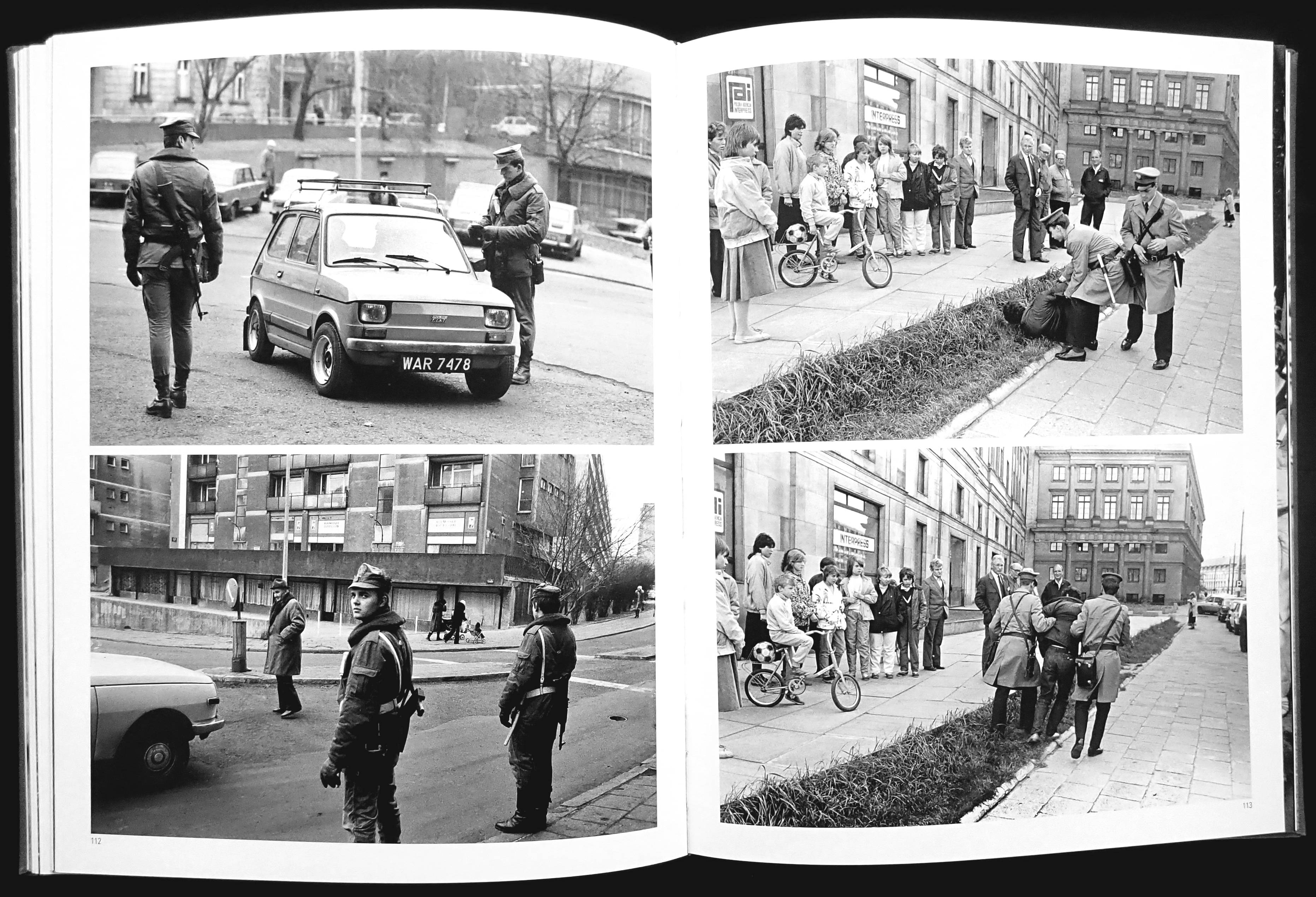
Grace is a well-known American photojournalist who carried out many assignments behind the Iron Curtain. Most of the fascinating photos in the book were taken in 1977 when he traveled through East Germany, Poland, Romania and the Soviet Union. Others were taken in 1982 and 1989. 

Despite being assigned an official minder by the authorities in various countries Grace managed to take some quite telling photos of everyday life that capture the feel of living in those ramshackle economies. Pages forty-six and seven has a spread photo of passers-by looking at a collection of large portraits of the best employees at a Yalta spa, page sixty-three shows a long queue of women outside a shop (in Eastern Europe it was always best to carry a bag and join any queue, someone could be selling something in short supply) page sixty-six shows a rural road in Poland, the only traffic are several farm horses pulling carts, page eighty-four has four vending machines selling drinks that only used shared glasses, page one hundred and fifty-six reveals a Warsaw flea market with some men selling foreign-made consumer electronics. 

It's the life of ordinary citizens revealed in these photos that give them credibility though I wonder if things have changed significantly in the last few decades, especially in rural areas of the old communist satellite countries. Grace managed to capture a past that is probably still lingering but minus the state security apparatus. One slight annoyance with the book is that nine of the back pages have thumbnails of the photos and captions. Nearly all the pages have space for the captions which would have avoided plenty of flipping the pages backward and forwards to read a caption.

Tuesday, 5 April 2022

Strange houses (5/5)


 A worthwhile monograph of the artistic work of Ian Strange. . He, along with Gregory Crewdson, James Casebere and Gordon Matta Clark use domestic housing as the focal point of their art, although Crewdson takes it further by creating elaborate tableaus with people in or outside a house.

The book considers seven multiple examples of Strange's work, from Suburban in 2011 up to 'Island' in 2015-2017. Iso started in 2016 is still ongoing and I thought the least interesting of his work as it's the nighttime street shots of Perth, Australia and Mountainside, New Jersey, USA. The six photos are dark and show very little except street lights. Final act from 2013 is much more fascinating. Four houses on one street were selected from 16,000 due to be demolished because of a severe earthquake in Christchurch, New Zealand during 2011. One house, in particular, looks intriguing because Strange removed a strip of the exterior wall right around the building, lit it from the inside and photographed it. Zloty from 2015 shows a building in Katowice, Poland with the exterior completely covered in golden wallpaper. It was on display for eleven months before being knocked down.

Strange's work exists only as photographs because he uses the exteriors of homes that are to be demolished. Three buildings in Cleveland and Akron, Ohio had their exteriors painted with black letters, SOS, HELP, or RUN, the height of the property.

The landscape book has three essays in the front with some back pages showing Strange and his crew preparing the houses. All of these pages are printed on matt stock. The 113 pages of photos are printed on a smooth art paper with an impressive 250 screen.